
Posted on June 10, 2025
From Fragmentation to Freedom: Integrity Driven Recovery™ for Sexual Purity
By Dr. Jake Porter
This hope is a strong and trustworthy anchor for our souls.
Hebrews 6:19
Let perseverance finish its work so that you may be mature and complete, not lacking anything.
James 1:4
When I work with men caught in compulsive sexual behaviors—be it pornography use, infidelity, or other patterns—they often come with a familiar story: repeated failure, mounting shame, and a desperate desire for change. But underneath it all, what I hear most clearly is a cry of disintegration. Something’s broken, not just in behavior, but at the core of being.
That’s what led me to develop Integrity Driven Recovery™, a holistic model for recovery that isn’t about sin management, symptom suppression, or white-knuckled sobriety. It’s about becoming whole—what the New Testament calls teleios.
The word teleios is used repeatedly in Scripture to describe what we’re meant to become in Christ: mature, complete, integrated. It’s not about moral perfection in the Western sense. It’s about the restoration of every fragmented part of ourselves into alignment with God’s design. And that’s the invitation of recovery—not just to stop doing something destructive, but to become someone whole.
Beyond Behavior: The Problem of Fragmentation
Too often, we’ve treated sexual struggles as behavioral issues to be managed with filters, rules, or sheer willpower. But lasting recovery doesn’t come from behavioral tinkering. It comes from addressing the underlying fragmentation—the disconnection between body, mind, heart, and spirit.
The person who acts out sexually is not simply giving in to lust, but is often trying to regulate a nervous system that has never known safety, soothe emotions he was never taught to name, or cope with shame that’s rooted in one’s earliest wounds.
This is why I say: The goal of addiction recovery is not sobriety—it’s integrity.
Integrity as Wholeness: Four Domains of Alignment
Integrity Driven Recovery™ is about cultivating internal alignment across four key domains of the self:
-
**Physical Integrity
**We begin with the body. A dysregulated nervous system cannot sustain ethical choices. Recovery here means stress inoculation, sleep restoration, movement, and grounding practices. When one trains the body for regulation, the capacity for freedom increases. -
**Emotional Integrity
**Many people in recovery can recite Bible verses but can’t name their feelings. Emotional integrity involves learning to recognize, regulate, and respond to emotions rather than reacting from fear or numbness. It’s the recovery of affective resilience. -
**Ethical Integrity
**This is about living in alignment with one’s deepest values, not just one’s strongest impulses. We implement pre-commitment strategies, decision-making drills, and what I call integrity audits—practices that help train the will and make aligned action second nature. -
**Spiritual Integrity
**This is the deepest work. Here, we ask: What is the sacred purpose of your life? Recovery is not just about what we stop doing—it’s about what we’re being restored for. This is where hope anchors the soul: in the rediscovery of meaning, calling, and belonging in the presence of God.
Maturity Through Perseverance
James 1 tells us that perseverance must finish its work so that we may be teleios—mature and complete, not lacking anything. That’s not just a theological idea. It’s a recovery roadmap.
This journey will not be quick. It will require courage, community, and repeated return. But for those willing to persevere, it offers more than just sobriety—it offers transformation.
I have seen struggling addicts become more than abstinent. I’ve seen them become anchored. Not tossed about by every urge or trigger, but grounded in the grace of God and the integration of a restored self.
A Word to the Struggler and the Shepherd
If you are in the fight yourself, I want you to hear this clearly: you are not beyond repair. You are not too far gone. The same God who knit you together in your mother’s womb is still in the business of restoration.
And if you are a pastor, coach, counselor, or friend walking with someone in this journey, know that the call is not to manage them, but to mirror to them their God-given dignity. Hold a vision for their telos—not just who they are, but who they’re becoming.
In a world that often tries to medicate pain or legislate behavior, let us remember the ancient and enduring invitation of Christ: “Be perfect [teleioi], as your heavenly Father is perfect.” Or, better translated: Be whole. Be complete. Be what you were made to be.
That’s not a demand for flawlessness. It’s a call to integrity.
It’s a call to freedom.
And it's one we can answer—anchored in hope.
Dr. Jake Porter will be speaking at the Pure Desire Summit 2025. Visit our website to learn more about the Pure Desire Summit and to register!
The views, opinions, and ideas expressed in this blog are those of the author alone and do not reflect an official position of Pure Desire Ministries, except where expressly stated.
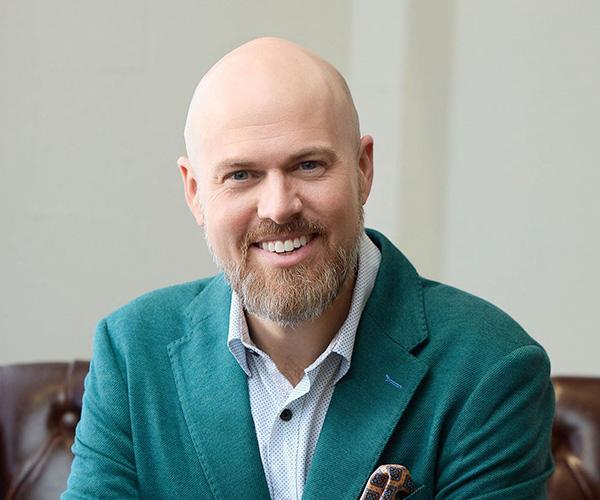
Dr. Jake Porter
Dr. Jake Porter is the founder and president of Daring Ventures and the creator of the Couple–Centered Recovery® model, an innovative approach to relational healing after betrayal and addiction that has transformed the lives of hundreds of couples around the world. Rooted in his own redemptive journey of personal recovery, Dr. Jake integrates insights from attachment theory, developmental neuroscience, and spiritual formation to guide individuals and couples toward deep healing and authentic connection. A former pastor turned clinician, he brings a unique blend of theological depth and clinical precision to his work. He lives in Houston with his wife, Kristen, and daughters, Magnolia Jane and Lottie Jo.